Clickable chart
Can you visit Uluru in January and the other hot months?
The short version
You can visit Uluru in January: the park is open daily from 5.00 am, but Yulara averages 38.4°C and walking after 11.00 am is strongly discouraged.
Summer essentials
Twelve months at the rock
Light and heat through the year
Choose a month to compare sunset, day length and the usual heat at Uluru, with what the park says about it.
Sunset
Jan
The NOAA record averages a daily high of 38.2 °C in January at the Uluru Rangers station.9
Feb
Opening hours run from 5.00 am to 9.00 pm in January and February.2
Jul
The best time to come is May to September, when highs usually sit between 20°C and 30°C.7
Nov
November averages a high of 34.2 °C at the rangers station, with 42 mm of rain.9
Dec
Yulara averages a December maximum of 36.5°C, the Bureau of Meteorology table shows.16
Sunset is worked out for the 15th of each month on Northern Territory time, which has no daylight saving. Day length is for Uluru; temperatures come from the NOAA station Uluru Rangers, 2.5 km from the rock, a 1991 to 2020 record with few years per month.
Can you visit Uluru in January? Yes, the gates open daily all year round. But summer at the rock means 35°C and more, walks that close by late morning and a day built around the heat.
Editorial team, ulurudaytrip.com · Updated November 8, 2026 · 7 min reading time
Quick look
- Open in summer?Yes, every day of the year, from 5.00 am in January.1,2
- How hotYulara averages 38.4°C in January, per the Bureau of Meteorology.3
- Walking ruleIn summer, Parks Australia strongly recommends no walking after 11.00 am.4
- WaterAt least one litre per person per hour of walking.5
- The upsideStorms that start Uluru's waterfalls flowing.6
Can you visit Uluru in January?
You can. There is no closed season: the park admits visitors daily, and in January its gates stay open from 5.00 am to 9.00 pm.1,2 What changes in summer is not access but timing. The park itself steers visitors toward May to September and warns that from October to March the days often climb past 35°C.7,8 A January visit works when you plan for that heat rather than around it.
Park figures make the scale clear. The Bureau of Meteorology averages for Yulara, which the park publishes, give January a mean maximum of 38.4°C and a mean minimum of 22.8°C.3 Inside the park, NOAA's figures for the Uluru Rangers station show an average January high of 38.2 °C.9 Parks Australia adds that summer days can reach 47°C.10 That is the heat you are signing up for.
Can you visit Uluru in November, December or January as well? The honest answer is yes, with conditions. Walk at dawn, hide from the middle of the day, and come back out for the evening. Families with small children, older travellers and anyone with a heart or lung condition should think hard about the cooler months instead. For everyone else, summer has rewards: quieter paths, long evenings, and the chance of a storm turning the rock silver.
Heat rules
Walks that close on hot days
| Walk | Closes from | When the temperature reaches |
|---|---|---|
| North-east walk | 11 am22 | 40 degrees Celsius or more22 |
| Lungkata walk | 2 pm23 | 40 degrees Celsius or more23 |
| Valley of the Winds circuit | 11:00am24 | 36°C daily maximum24 |
| Base walk (advice) | Finish before 11.00 am12 | Any hot day |
Rules as published by Parks Australia on its walk pages and daily access report; check the report on the day, as conditions change.
December, November and the start of the storms
Is it OK to visit Uluru in December? Yes, on the same terms as January. The park's Yulara table gives December a mean maximum of 36.5°C and November 35.1°C.16 At the Uluru Rangers station, the NOAA record averages 35.8 °C in December and 34.2 °C in November.9,9 The difference between those sources is small. The message is the same: hot, every afternoon.
November sits at the start of the hottest stretch. Anangu describe a season called Mai wiyaringkupai or kuli, usually from late October to December, as the hottest season of the year.17 Storm clouds bring lightning but little rain then, and lightning strikes can start fires.18 The park opens at 5.00 am in both November and December, which gives you a long cool start if you use it.19
Then comes the wetter half of summer. Usually from January to March it is Itjanu, the season of grey cloud, rain and flowering food plants.20 The park gets around 300 mm of rainfall a year, and the Yulara averages give December 45.5 mm and February 38.4 mm.21,16,3 Rain here is short and dramatic, not a washout, and it can arrive with very little warning.
Month by month
A year of heat and rain at Uluru
- Jan10.4 h
- Feb11.0 h
- Mar11.7 h
- Apr12.5 h
- May13.1 h
- Jun13.4 h
- Jul13.3 h
- Aug12.8 h
- Sep12.1 h
- Oct11.4 h
- Nov10.7 h
- Dec10.3 h
Months compared by sunless hours at mid-month and days with 2.5 mm or more of precipitation. NOAA station Uluru Rangers, 1991 to 2020.9
Walks that close in the heat
Summer changes which walks you can do and when. Parks Australia says some tracks shut on summer afternoons, when the danger of heat stroke peaks.27 On the base walk its advice is to walk only in the cooler morning hours and finish before 11.00 am.12 Do not walk on any track that is closed because of the heat; the closures are there for a reason.28
The specific rules are published. On days forecast or measured at 40 degrees Celsius and above, the North-east walk shuts from 11 am.22 The Lungkata walk closes from 2 pm at the same temperature.23 At Kata Tjuta the daily access report shows the whole Valley of the Winds loop shutting at 11:00am once a 36°C maximum is reached.24 Check the access report on the morning of your visit.
What stays open is still plenty. The Mala walk and the Kuniya walk are short, and in summer Mutitjulu Waterhole and the nearby rock art cave give relief from the scorching temperatures.29,30 Indoors, the Cultural Centre welcomes visitors daily from 7.00 am, closing at 5.45 pm.13 A summer itinerary simply moves the long walks to dawn and the culture to midday.
Go or wait
Should you go in the hot months?
Pick the line closest to your situation.
If I can only travel in January
Go, and plan for dawn and dusk
If I want the long hikes
Choose May to September
If I am travelling with young children
Consider the cooler months
Temperatures regularly reach 30°C or more.25
If I hope to see waterfalls on the rock
Summer gives the best chance
Storms and rain start Uluru's waterfalls flowing.6
If I hate flies
Pack a head net
Summer brings large numbers of flies.26
Water, flies and the body in the heat
Water is the first rule. Every walker needs a litre of water or more for each hour on the track, drunk, not just carried. Leave sports drinks, diet cordials and caffeine behind, since all of them can add to dehydration.5,32 Heat exhaustion, dehydration and hyponatremia, low sodium in the blood, are very real dangers at Uluru.35 Eat regular snacks too, even if heat dulls your appetite.
Know the warning signs. Heatstroke can show as a body temperature over 38.5°C, confusion or a rapid pulse.36 Walk with another person at all times.33 Emergency help is on 000, and 112 also works from a mobile, and remember that coverage around Kata Tjuta has black spots.37,38 Most walks carry emergency radios for exactly that reason, so note where they are as you pass them.37
Then there are the flies. Summer means swarms, and the park suggests a head net; you can pick one up on arrival.26 The park's packing list includes one, along with a broad-brimmed hat, sunscreen, long lightweight clothing and a water bottle or hydration pack.31 The day tour from the resort asks guests to bring a flynet and cool, light clothing in summer.
Price a cooler day
Compare tours that dodge the heat
Pick a tour and your group size.
Compare 4 side by side
Compare tours that dodge the heat
Pick a tour and your group size.
- Sunrise segway5 hours · per person starting at $181
≈
View - Sunrise and Kata Tjuta5 hours · per person starting at $147
≈
View - Resort day with BBQ7 hours · per person starting at $230
≈
View - From Alice SpringsCoach day trip · per person starting at $279
≈
View
These from-prices come from GetYourGuide and are converted using the ECB reference rate; the exact price shows at checkout.
A hot-month day
A summer day at Uluru, in order
Before sunrise
Gates open
The park opens at 5.00 am in summer.2
Early morning
Walk while it is cool
In the warm season the ranger walk leaves at 8.00 am.11
By late morning
Off the long tracks
Finish the base walk before 11.00 am in hot weather.12
Midday
Cultural Centre and lunch
Doors open at 7.00 am, close at 5.45 pm; Ininti sells food.13,14
Afternoon
Pool and shade
Keep off the tracks between 2.30 and 6.30 pm.15
Evening
Sunset and a late close
January closing time is 9.00 pm.2
Storms, rain and waterfalls
The hot months have one spectacle the cool months cannot match. In the park's words, summer heat breeds the storms that refill waterholes and set waterfalls running down Uluru.6 When rain falls, it points visitors to the Kuniya walk for a close look at the falls.39 If clouds build in the afternoon, that is the moment to be near the rock rather than by the pool.
Storms move fast here. Anangu observe that about ten minutes before a storm hits, the wind picks up and the temperature drops.40 The warmer months bring extreme heat and rainstorms, with temperatures often soaring well above 35 degrees.41 Keep an eye on the sky and know where your car or the nearest shelter is, because a dry track can turn into a running creek within the hour.
Rain also affects activities. Segway tours switch to a wet weather track on rainy days, and bike hire is refunded if weather closes it for a period.42,43 On the roads, Tourism NT warns that during the wet season or tropical summer, November to April, some roads may close because of flooding.44 Check the road report each morning if you are driving.45
Video
Uluru and Kata Tjuta in extreme summer heat
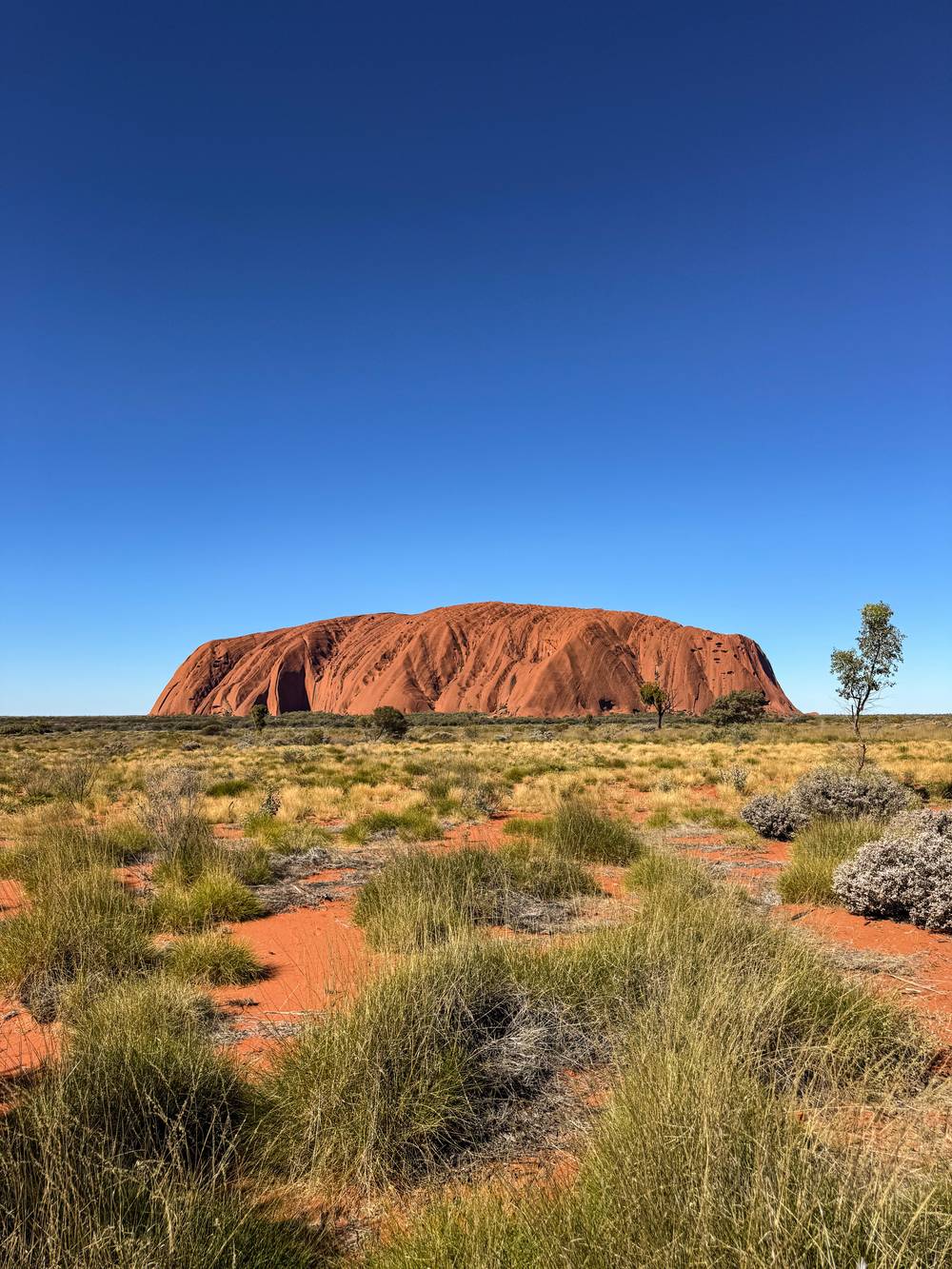
Kristi Travel Escape on YouTube · The clip loads only after you tap play.
Temperatures in the park regularly reach 30°C or more and can exceed 40°C during summer.
Summer kit
What a hot-month visit needs
Shaping a summer day at the rock
Start in the dark. The gates open at 5.00 am in summer, and the cool hour before sunrise is the best walking time of the day.2 From October to April the free ranger walk on the Mala track starts at 8.00 am, ahead of the worst heat.11 Tourism Central Australia gives the same advice for the whole region: outdoor activities early, indoor ones in the afternoon.46
Spend the middle of the day inside or in water. Rest through the hottest part of the day: the park asks walkers to keep off the tracks from mid-afternoon until early evening.15 The Cultural Centre, lunch at Ininti and the resort pools fill those hours well.13,47 Some activities are best at night, when the temperature drops, such as sunset, dinner outdoors or an astronomy tour.34
Summer evenings are long. Closing is 9.00 pm in both January and December, so a sunset and a picnic at the car sunset area, one of the park's two alcohol-permitted spots, fit easily.2,19,48 The day trip sold on this site finishes in the same spirit, with a barbecue dinner and a drink at the coach sunset area, and it is listed from $279.
Is a summer day trip from Alice Springs a good idea?
It can be, with eyes open. On the tour, the coach takes 5 hours in each direction, so the guided walking at the rock and Mutitjulu Waterhole falls in the afternoon.49 That puts it inside the hours the park flags as hottest, so expect short walks, shade stops and plenty of water rather than long hikes.15
If you are already at Yulara, a sunrise tour fits summer better. The sunrise Segway tour starts at dawn and is listed from $181, and the sunrise and Kata Tjuta bus day lasts 5 hours, from $147. Both get you back to the resort before the worst of the afternoon heat, which leaves the afternoon for the pool and the evening free for a second, cooler look at the rock.
Whatever you book, buy your park pass first, because the day trip no longer includes it: an adult pass costs AUD 38 and lasts 3 days, while under-18s enter free.50,51 Summer is not the easy season at Uluru. It is the season for early risers, for storm watchers and for travellers who would rather see the rock with fewer people around. If that sounds like you, go, and pack more water than you think you need.
FAQ
Quick answers to quick questions.
Is Uluru open in January?
How hot is Uluru in January?
Bureau of Meteorology averages for Yulara give January a mean maximum of 38.4°C.3
Which walks close in the heat?
How much water should I carry?
Plan on drinking a litre or more per person for each hour you walk.5
Are the flies bad in summer?
Flies arrive in force in summer; head nets are on sale locally.26
Does it rain at Uluru in summer?
Hot weather brings storms and rain that fill the waterholes and start the waterfalls.6
What is the best time to walk in summer?
Parks Australia advises finishing the base walk before 11.00 am in hot weather.12
When is the cooler season?
The best time is May to September, when maximums are usually 20°C to 30°C.7
Sources
- Parks Australia · Opening hours ↩
- Parks Australia · Opening hours ↩
- Parks Australia · When to come ↩
- Parks Australia · Staying safe ↩
- Parks Australia · Staying safe ↩
- Parks Australia · When to come ↩
- Parks Australia · When to come ↩
- Parks Australia · When to come ↩
- NOAA · Global Summary of the Month, Station Uluru Rangers (NOAA GHCN ASN00015660), 1991 to 2020 ↩
- Parks Australia · Amazing facts ↩
- Parks Australia · Ranger-guided Mala walk ↩
- Parks Australia · Uluru base walk ↩
- Parks Australia · Opening hours ↩
- Parks Australia · Cultural Centre ↩
- Parks Australia · Staying safe ↩
- Parks Australia · When to come ↩
- Parks Australia · Seasons ↩
- Parks Australia · Seasons ↩
- Parks Australia · Opening hours ↩
- Parks Australia · Seasons ↩
- Parks Australia · Amazing facts ↩
- Parks Australia · North-east walk ↩
- Parks Australia · Lungkata walk ↩
- Parks Australia · Uluru-Kata Tjuta access report ↩
- Parks Australia · Staying safe ↩
- Parks Australia · When to come ↩
- Parks Australia · Uluru base walk ↩
- Parks Australia · Staying safe ↩
- Parks Australia · Kuniya walk and Mutitjulu Waterhole ↩
- Parks Australia · Kuniya walk and Mutitjulu Waterhole ↩
- Parks Australia · What to pack ↩
- Parks Australia · Staying safe ↩
- Parks Australia · Staying safe ↩
- Tourism Central Australia · Best Ways To Cool Down In The Red Centre ↩
- Parks Australia · Staying safe ↩
- Parks Australia · Staying safe ↩
- Parks Australia · Staying safe ↩
- Parks Australia · Phone and internet access ↩
- Parks Australia · Kuniya walk and Mutitjulu Waterhole ↩
- Parks Australia · Seasons ↩
- Parks Australia · Seasons ↩
- Uluru Segway Tours · FAQ ↩
- Outback Cycling · Frequently Asked Questions Uluru Bike Ride ↩
- Tourism NT · Road safety ↩
- Tourism NT · Road safety ↩
- Tourism Central Australia · Best Ways To Cool Down In The Red Centre ↩
- Parks Australia · Shops and facilities ↩
- Parks Australia · Frequently asked questions ↩
- Emu Run Experience (operator official site) · 1 Day Uluru and Sunset BBQ Tour ↩
- Parks Australia · Buy your pass ↩
- Parks Australia · Buy your pass ↩
Related guides